Thanks for shopping small & local!
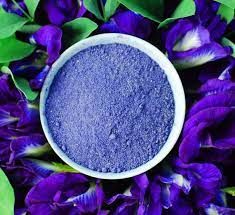
Butterfly Pea Flower Powder
Share
$7.77
In stock
1
Butterfly Pea Flower Powder
Share
Customer reviews
Customer reviews
Reviews only from verified customers
No reviews yet. You can buy this product and be the first to leave a review.
Product details
Butterfly Pea Flower, or Clitoria ternatea by its scientific name, is a plant most commonly grown in South East Asia. Traditional ancient communities have used this plant for centuries as a tea for its strong antioxidants and health benefits, as well as topically for its beautifying and healing properties. Traditionally, the Butterfly Pea flower is said to be ruled by the planet Venus and connected to the element of water, which gives it the attributes of love, emotion, serenity, and protection. In India, this flower is named after Hindu goddess, Aparajita, meaning one who cannot be conquered or defeated. It is is commonly offered during Puja rituals, which are daily rituals of ceremonial worship, that usually includes a brief offering to a god. In Thailand, this drink is called Anchan tea. Thai folklore tells us that a woman named Isra was taken on an adventure by a half woman half bird creature, called a kinnari. The kinnari showed her these flowers and instructed her to grow them and use them for healing. It is also common to use the Butterfly Pea flower in Thai and Malaysian cuisine to bring the blue color to dishes like desserts and sticky rice. This flower is rich in history and myth, but has gained worldwide popularity mainly for its color changing properties.
See our Tea Brewing Instructions
Pricing for herbs, powders, teas, salts & herbal blends is per ounce unless otherwise specified.
This information is for education purposes, and is not intended to diagnose, treat, cure, or prevent any disease. This information has not been evaluated by the Food and Drug Administration.
Powered by Lightspeed
Display prices in:USD